
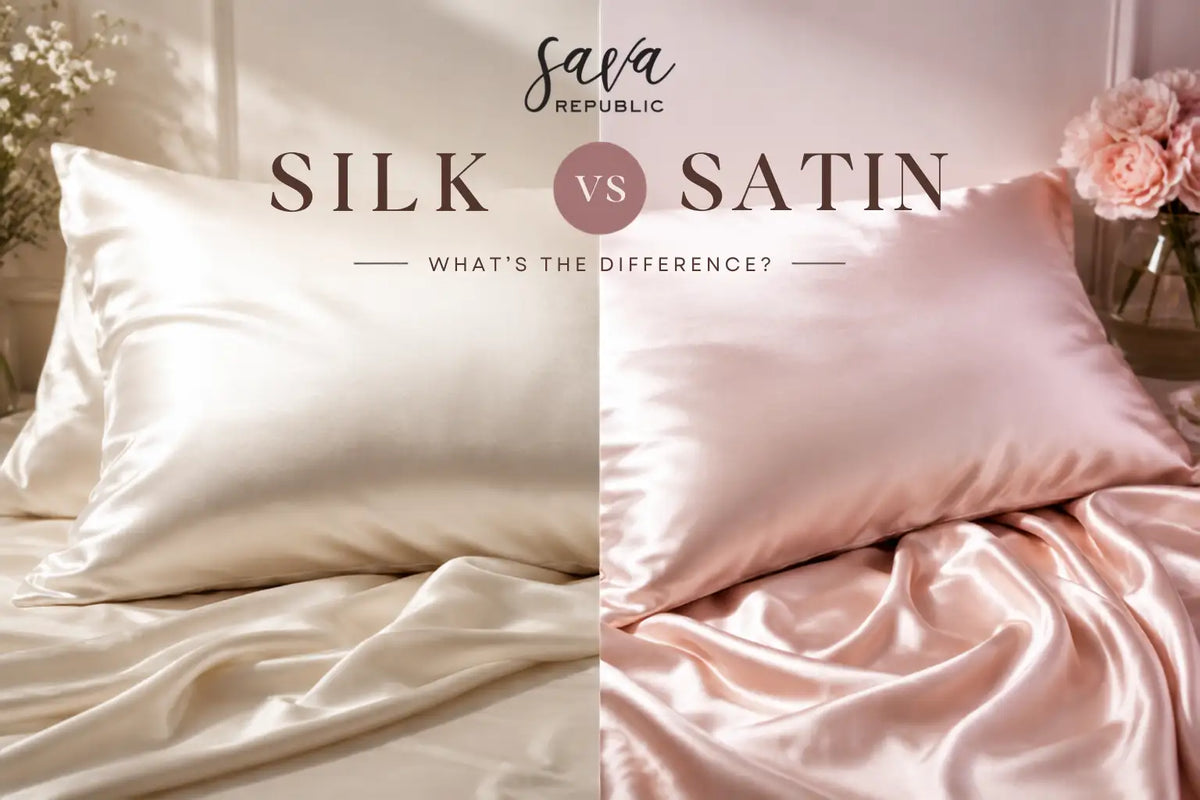
Walk into any homewares store and you'll see pillowcases labelled "satin" sitting alongside those labelled "silk." They look similar, they feel somewhat similar — so what's the actual difference? And does it matter for your hair and skin? The short answer: yes, it matters a great deal.
What Is Satin?
Satin is not a material — it's a weave pattern. A satin weave creates a smooth, glossy surface regardless of what fibre is used. Most "satin pillowcases" sold in Australia are made from polyester woven in a satin pattern. Polyester is a synthetic petroleum-derived plastic fibre that happens to look shiny. It's inexpensive to produce, which is why these pillowcases are so affordable.
What Is Silk?
Silk is a natural protein fibre produced by silkworms. Mulberry silk — the highest quality variety — comes from silkworms fed exclusively on mulberry leaves. The resulting fibre is extraordinarily long, smooth and lustrous. Silk can also be woven in a satin pattern (this is called "silk satin"), but the base material is entirely different from polyester satin.
Silk vs Satin: Key Differences
Material Origin
Silk is a natural fibre; most satin is synthetic polyester. This single distinction drives most of the other differences between the two.
Breathability and Temperature Regulation
Natural silk fibres are breathable and thermoregulating — they adapt to your body temperature. Polyester satin traps heat and doesn't breathe, which can cause you to overheat during the night and wake up sweaty. For sleepers in Australia's warm climate, this is a significant practical difference.
Moisture Interaction
Silk has a lower absorbency rate than cotton but a higher absorbency rate than polyester. Crucially, silk distributes moisture rather than repelling it, making it gentler on skin. Polyester satin is hydrophobic — it repels moisture rather than interacting with it naturally — which can feel uncomfortable against skin.
Skin and Hair Benefits
Both silk and polyester satin are smoother than cotton, so both reduce some friction compared to a standard cotton pillowcase. However, only real silk contains natural amino acids and proteins that are compatible with human hair and skin structure. These proteins give silk unique conditioning properties that polyester simply cannot replicate.
Durability and Longevity
High-quality mulberry silk is surprisingly durable. Cared for correctly, a quality silk pillowcase lasts years. Polyester satin tends to pill, snag and degrade more quickly with regular washing.
Environmental Impact
Silk is a natural, biodegradable fibre. Polyester is a plastic that sheds microplastics during washing and takes hundreds of years to break down in landfill.
The Verdict
If budget is the primary concern, a polyester satin pillowcase is better than cotton. But for genuine benefits to hair and skin, breathability, longevity and environmental responsibility, 100% mulberry silk is in a different league entirely. Sava Republic pillowcases are made from Grade 6A OEKO-TEX certified mulberry silk — the gold standard in silk quality.


Leave a comment
This site is protected by hCaptcha and the hCaptcha Privacy Policy and Terms of Service apply.